
Textile Society Student Bursaries 2026
UNDERGRADUATE
Lola Bate
(Anne Morrell Prize) £500
Codes of Culture
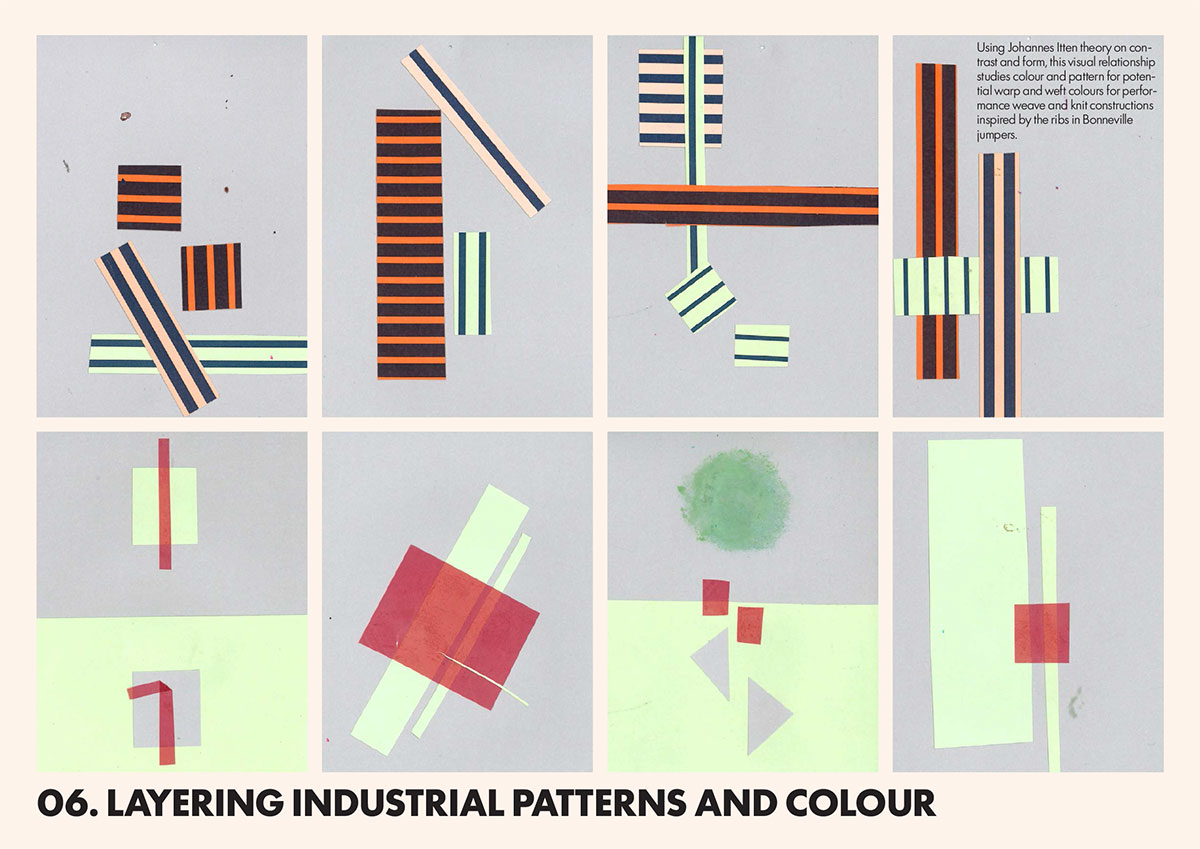
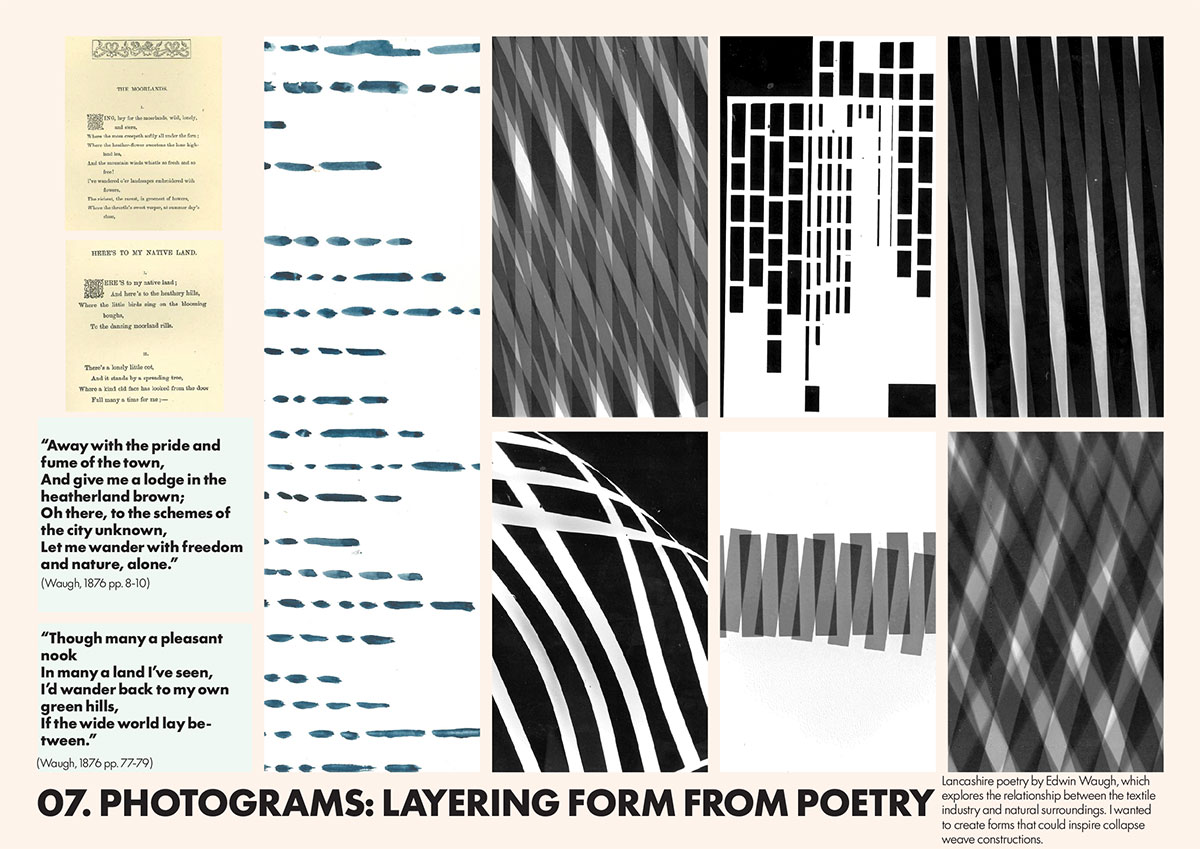
Lola’s collection ‘Codes of Culture’ focused on her personal experience of growing up and living in Lancashire. Through researching Lancashire’s industrial history, Lola was exposed to the poems of local poet Edwin Waugh that discuss the juxtaposition of industrial and natural landscapes, inspiring her visual research together with her family history.
Lancashire’s rich textile industry has been widely recognised nationally, however its influence on performance textiles has been overlooked. In December 2025, The British Textile Biennial hosted the ‘Pioneers of the Material World’ exhibition which sought to address this in a showcase of Lancashire’s performance textiles used for major expeditions across the globe. The judges, therefore, found Lola’s proposal and collection to be thoughtful and timely. It investigated ‘natural performance’, studying wool as a technical fibre and its ability to create forms through construction of weaving and knitting using the properties of different wool fibres, such as Merino and British wool to create multi-purpose textiles for unisex outerwear.
Lola’s aim was suitably ambitious and her proposal detailed with an exemplary budget plan. We wish Lola all the best for a successful career in textiles.
Aimee Coulson
£400
Fauna and Folklore
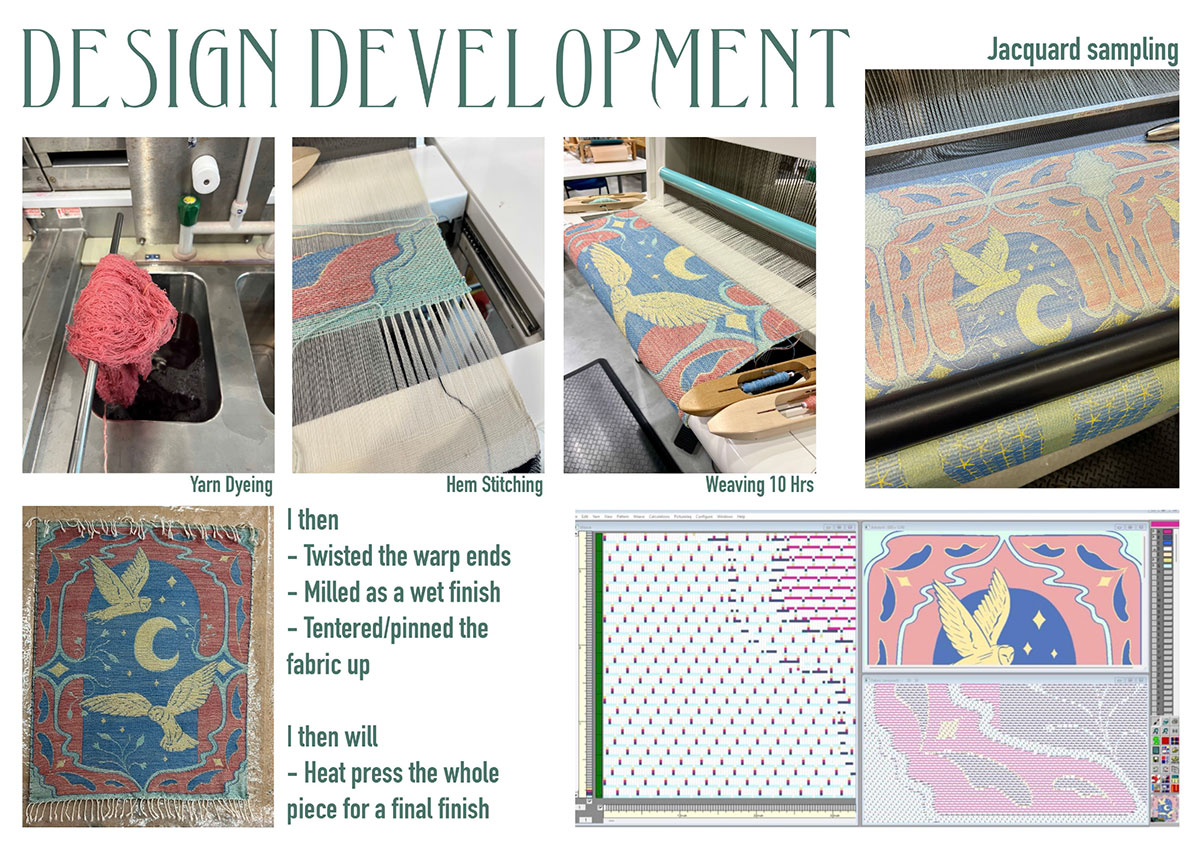
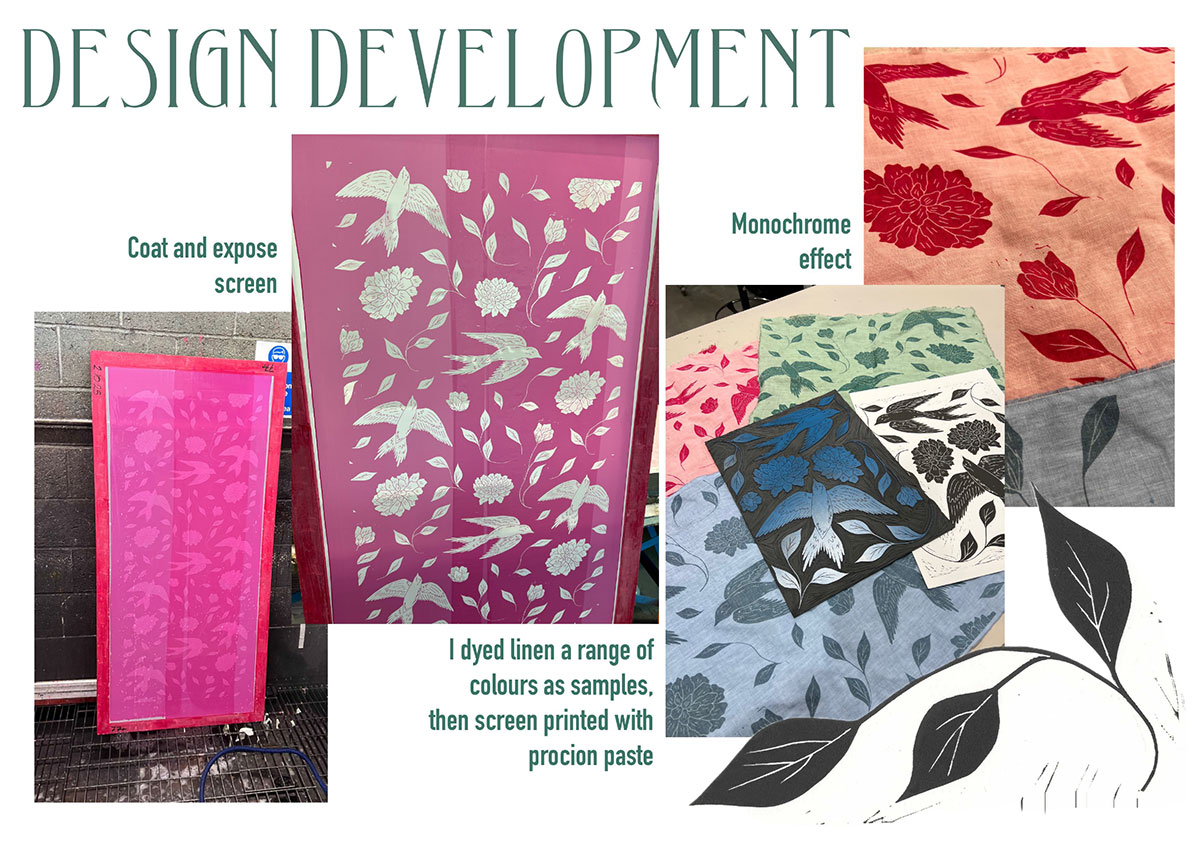
In her digitally and screen printed, and digitally woven, textiles collection, Aimee explored the symbolic language of native wild animals and botanicals found within English countryside folk tales, translating these narrative motifs into designs intended for contemporary rural homes.
Aimee’s commitment to conscious practice was impressive, focusing on using natural fibres and environmentally friendly print pastes and dyes, and sourcing second hand fabric or deadstock from local businesses. The judging panel enjoyed her charming designs and use of colour and drawing, akin to the work of celebrated painter and designer Enid Marx, doyenne of British folkloric textile design.
Joanna Cherian
£400
Around the table
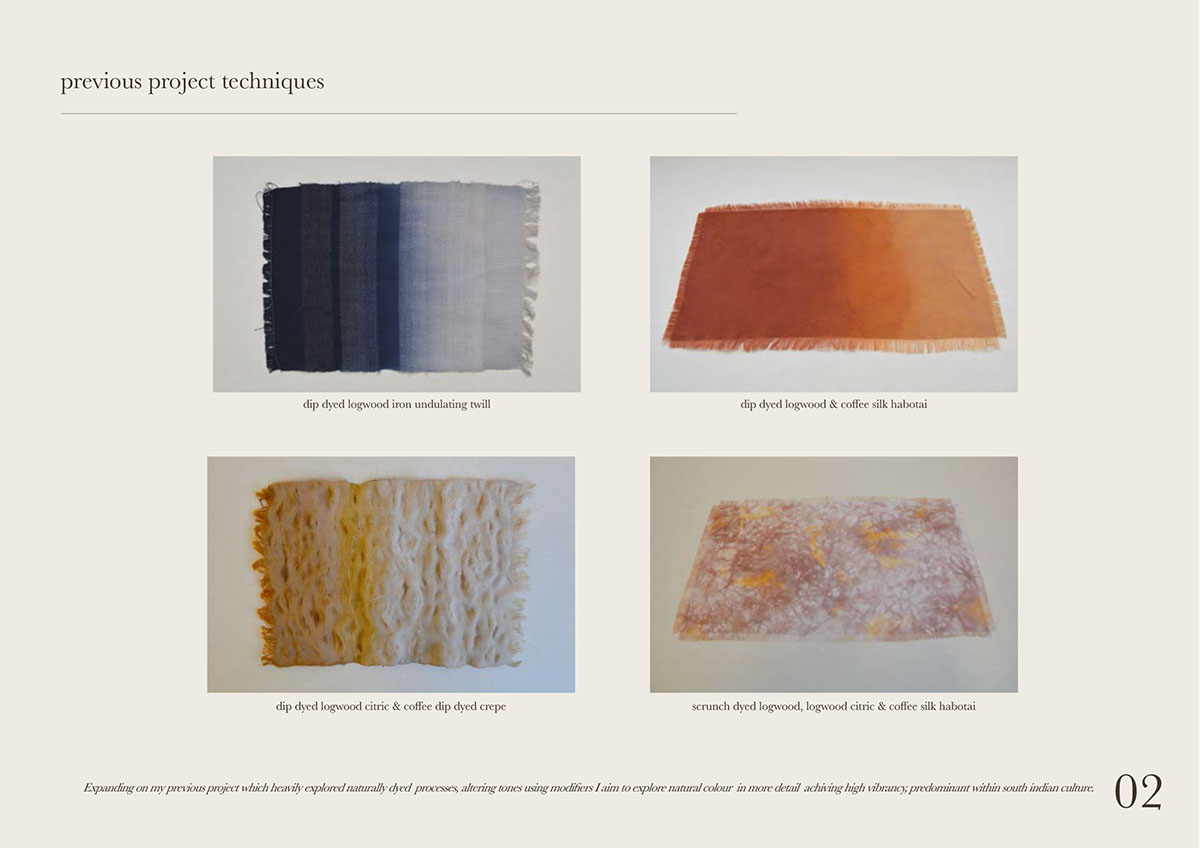
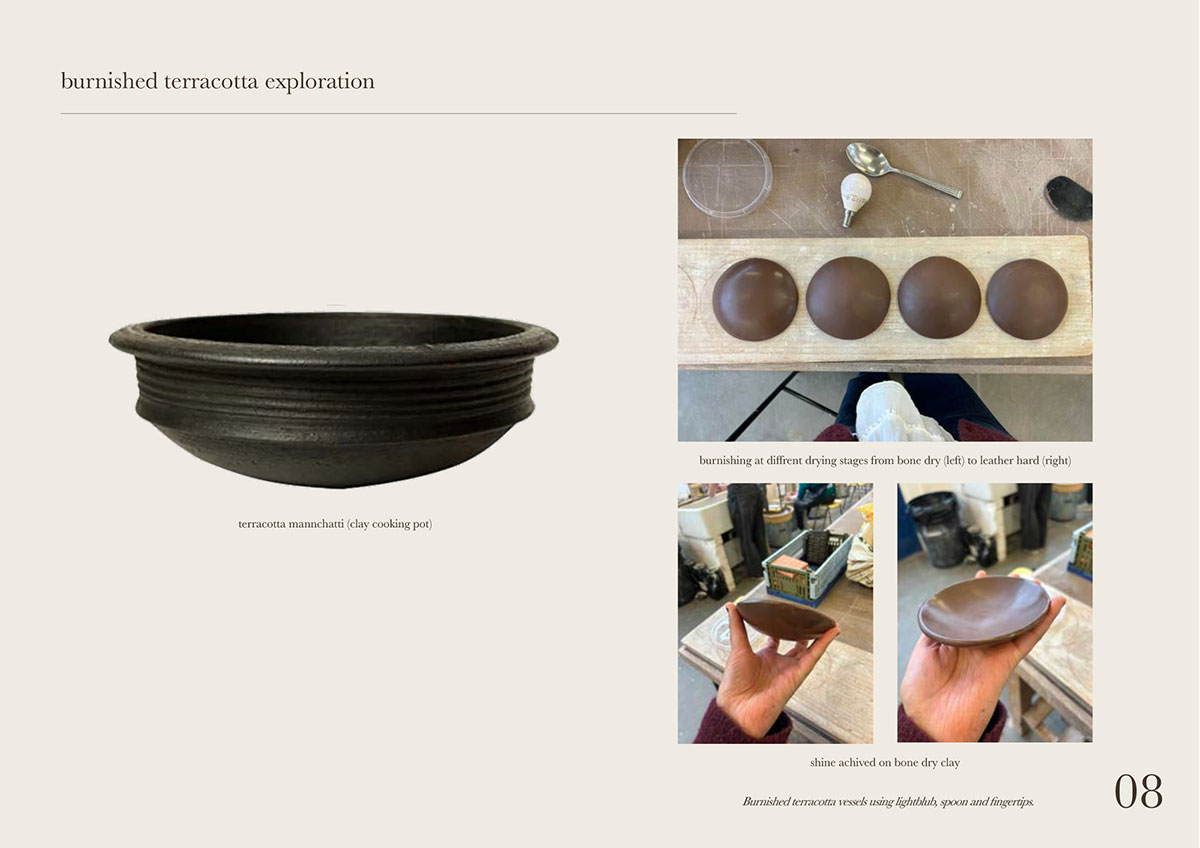
Joanna’s project explored how domestic dining materials might function as heirloom objects. Drawing on her South Indian heritage from Kerala and Tamil Nadu, Joanna investigated the history and material culture of cotton, terracotta, banana leaves, brass, copper and stainless steel, further examining how industrial production has altered domestic dining objects and disrupted craft traditions.
The judging panel loved that, in this collection of samples and objects, she brought together her love of textiles and materials with her enthusiasm for the kitchen, where preparing and sharing food becomes an act of preserving ancestral knowledge. She explained that the dining vessels she uses are deeply sensorial, holding heat, touch, and smell, often accumulating patina through repeated use.
Joanna’s proposal was totally authentic and covered new ground, and her budget plan to enable her to mount her bespoke materials onto trays, cork and a reclaimed wooden display surface, was detailed and appropriate. Her ambition to work with textile and hard materials was exciting whilst coherent and achievable, ranging from ikat weaving to marquetry, metal fabrication and terracotta clay.
Xingyan Wu
£400
Functional Glamour
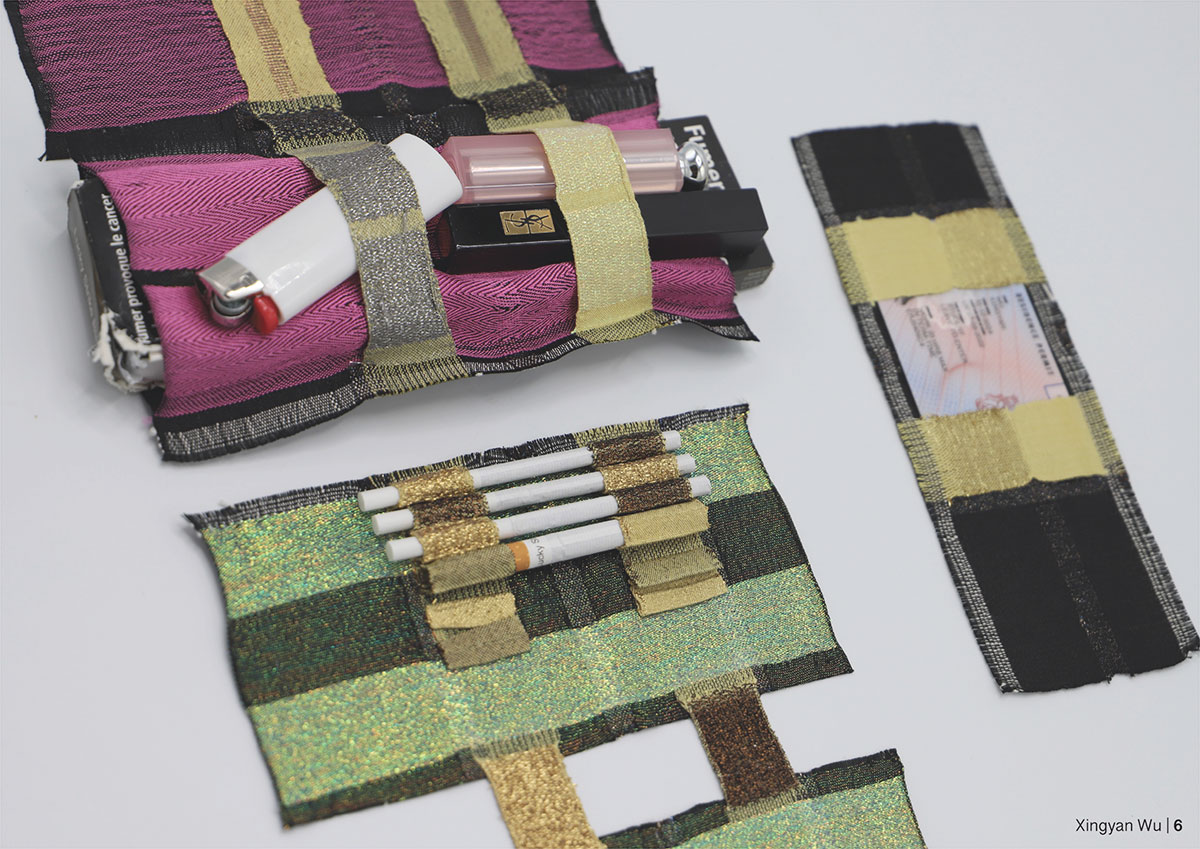
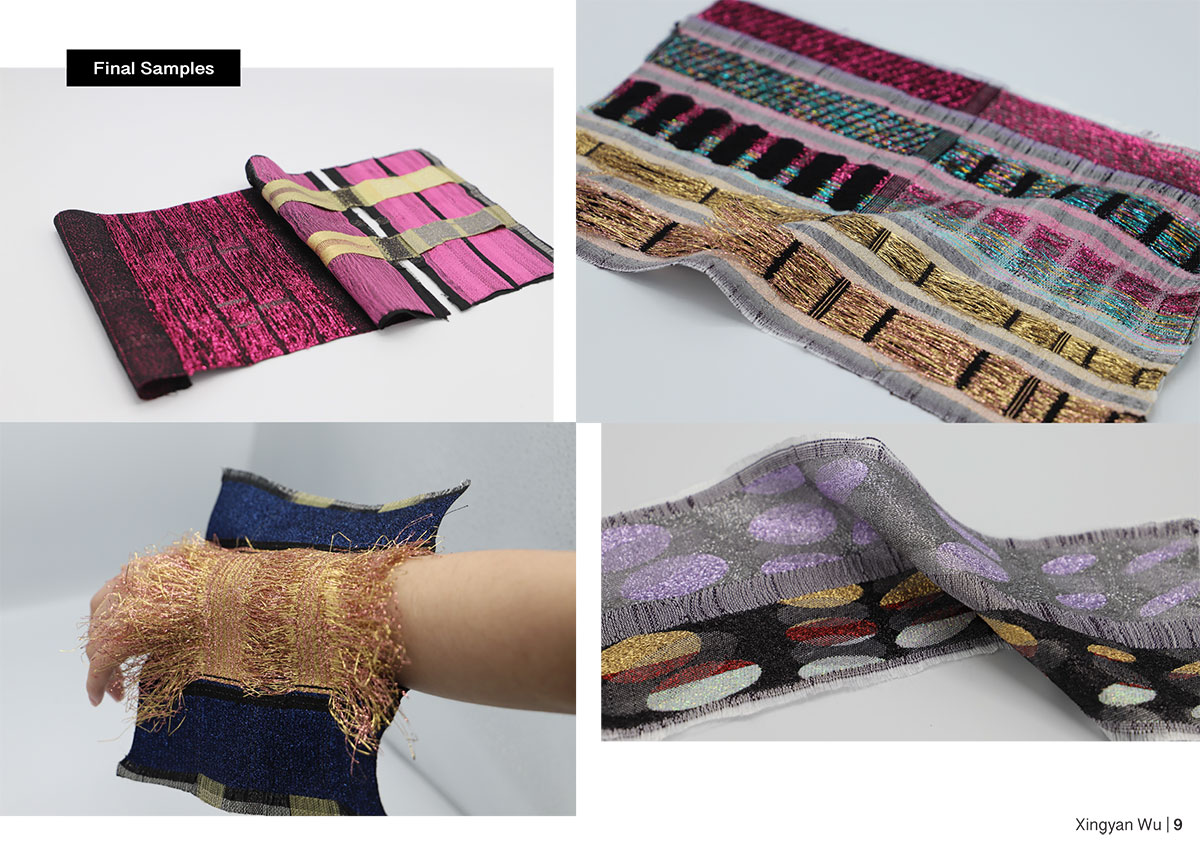
Inspired by innovative 3D weaving technologies, Xingyan’s proposal was to investigate how one-piece weaving and multi-layer cloth construction could be harnessed to reduce waste through cut-and-sew processes. Through handloom sampling and digital Jacquard TC1 development, Xingyan tested satin weaves, velvet constructions and extra weft floats to recreate reflective, glittery textures, inspired by the legendary London Blitz Club, so influential on fashion, music and youth culture during the 1980s. Chiefly at prototype stage her double cloth and triple cloth samples that could hold clubbing ‘essentials’ like lipsticks, cash cards, ID and (how very 80s!) cigarettes were intriguing and inventive.
Xingyan’s proposal was well thought out and clear, including the purchase of tools, out-sourcing digital weaving and supporting collaboration with Chinese factories for production testing.
Ilan Pozeilov
£400
Casa Cobre
Ilan’s collection centres on a narrative rooted in California (USA), where he was raised—a land once part of Mexico, taken and renamed. His family have worked in museum conservation, studying and preserving art, so his understanding of culture has been shaped by what is saved, together with an appreciation for natural material. His project was inspired by the discovery of a house built into the mountains of Alta California. Inside, multiple generations of a family were found buried with their belongings. A fascinating story and research, the family of Casa Cobre focused on making ceremonial costume for burial using the natural resources available including copper, Llama, silk, mohair, horsehair, human hair, cochineal and indigo.
The judging panel were captivated by Ilan’s concept, research and sampling using both unusual and more conventional textile materials demonstrating a high level of craftsmanship and style. The creativity within his work is outstanding, translated into showpiece garments, accessories and wearable contemporary hoodies, jumpers, tops and trousers.
Yiran Wang
£400
Placeholding
Yiran’s collection has a social and personal basis, shaped by her experience of the idea of home as a shifting place. Having lived across China, New Zealand and the UK, her practice and creative language is underpinned by sustained, transnational movement and negotiations between cultural and linguistic contexts, informing an understanding of belonging and home as something unfixed and shifting.
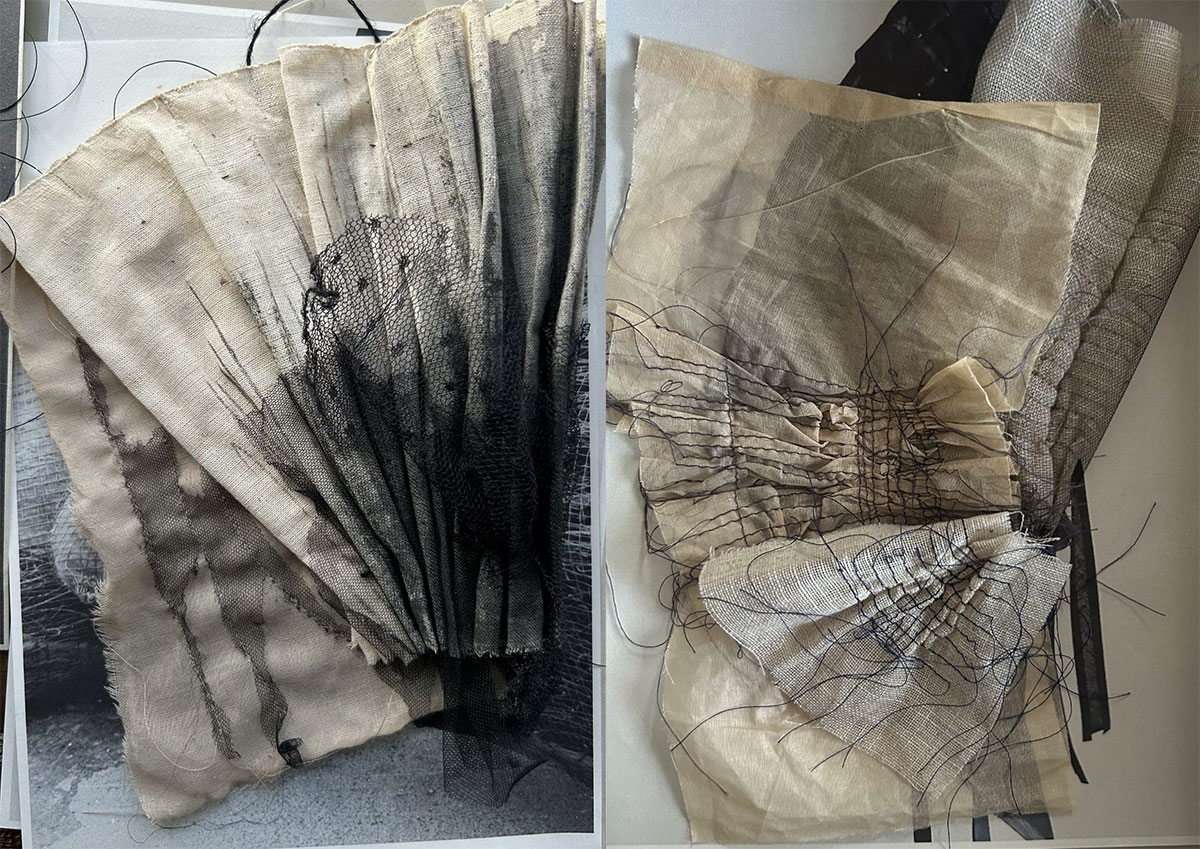
Her capsule fashion collection puts textile processing at its centre, exploring folding, creasing, peeling, tying and packing through techniques of hand-smocking, gathering large volumes, compressing, layering, weaving constructed surfaces, and patchwork. Yiran’s sampling was informed by primary research into traditional textile, fabrication and embroidery techniques and the creation of improvisational structures, all rooted in her hometown, and from other regions in China. These included material research into traditional smock-pleating and weaving techniques and fabric treatments with wax and proteins, a history that includes unique roles in storytelling, mythmaking and dressing rituals.
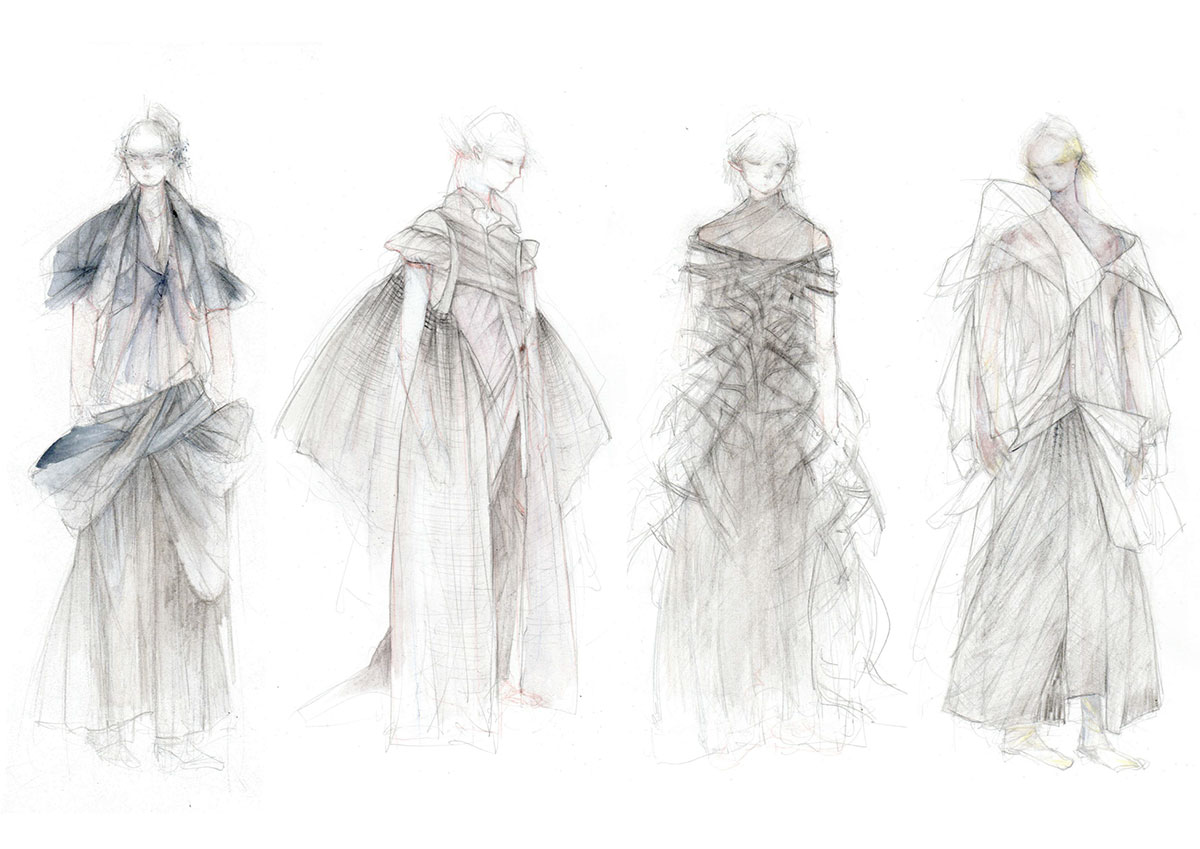
The translation of her sampling into final outcomes was outstanding, exquisite and ambitious and the judging panel wish to make special mention of her submission portfolio including the most delightful fashion illustrations.
Lily Yeung
£400
Sustainable design with craft heritage and cultural activism
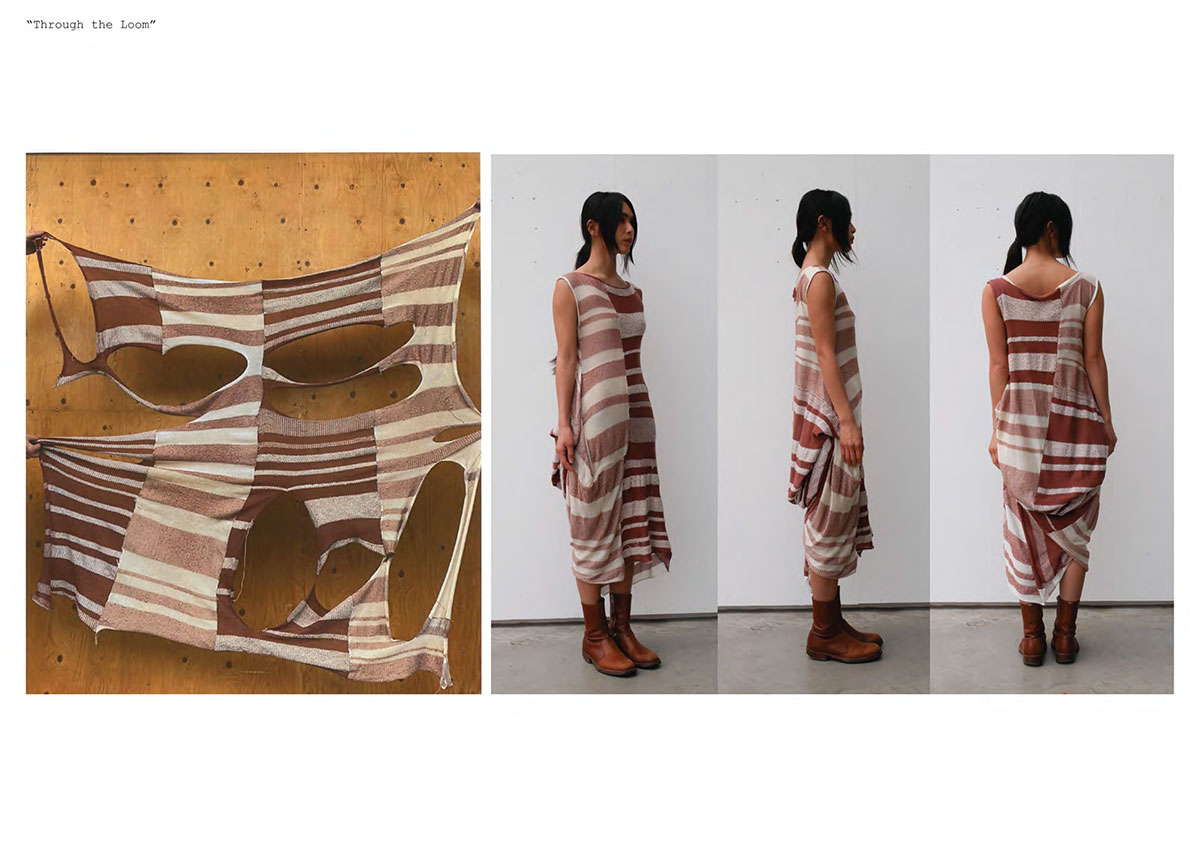
Lily’s project strongly reflected her Navajo Chinese heritage and passion for eco-design, collaboration with farmers from New Mexico (USA) and materials such as Navajo-Churro wool, the sheep having a long history as integral to the Navajo culture and economy.
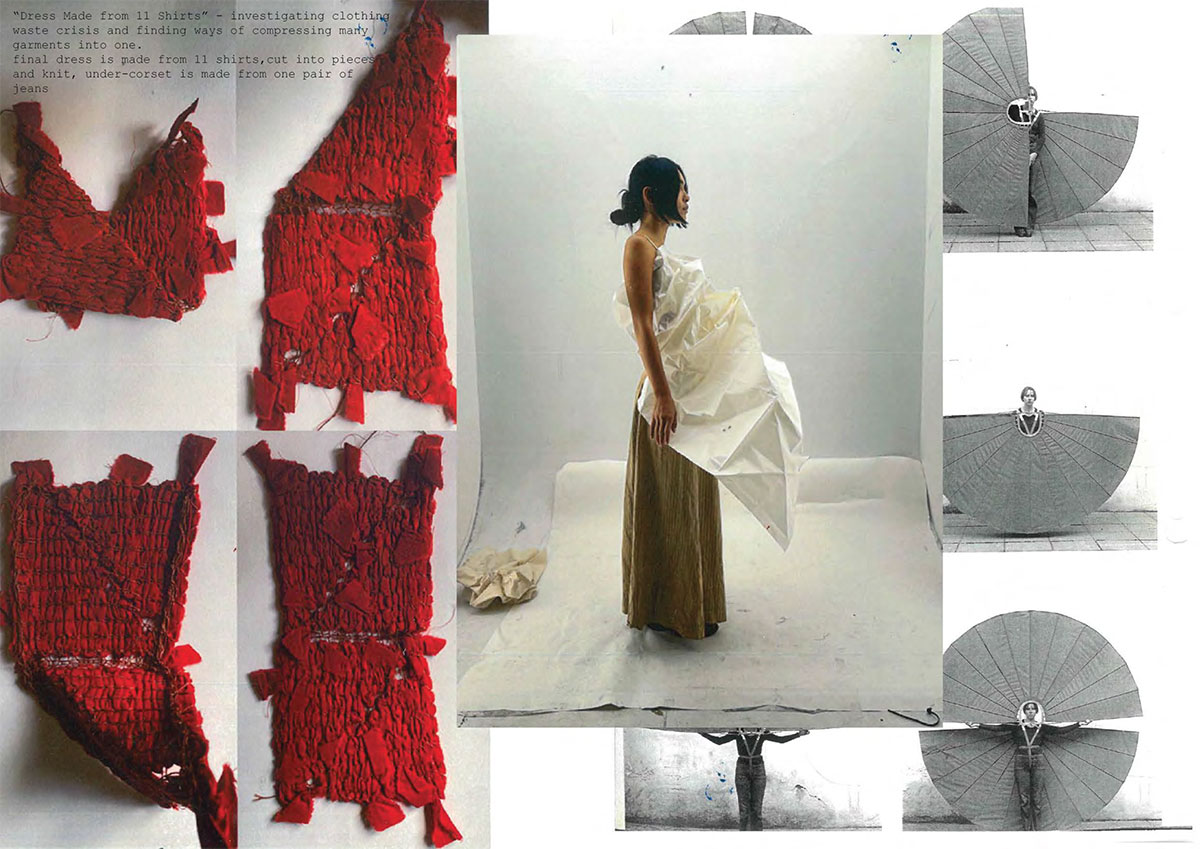
Lily’s proposal combined her long-standing love of eco practice using deadstock yarns and natural fibres with craftsmanship in knit, weave and crochet including outcomes such as a fully fashioned knitted boot using naturally dyed indigo Navajo Churro Wool (sourced from the Rainbow Fiber Co-op, a Dine’ led and shepherd owned cooperative in the Navajo Nation). In Lily’s work she acknowledges the importance of her familial cultures and their equally rich history of craft and textiles, ‘having both my parents teach and show me that history was really empowering and inspiring from a young age’.
The judging panel considered Lily’s work to be significant, beautifully considered and crafted, a designer to watch for the future! Her request for support to work with shepherds, weavers, and knitters was seen to be relevant and key to her values and activism, in addition to the exquisiteness of her textile outcomes.
POSTGRADUATE
Shih Ting Sun
(Anne Morrell Prize) £500
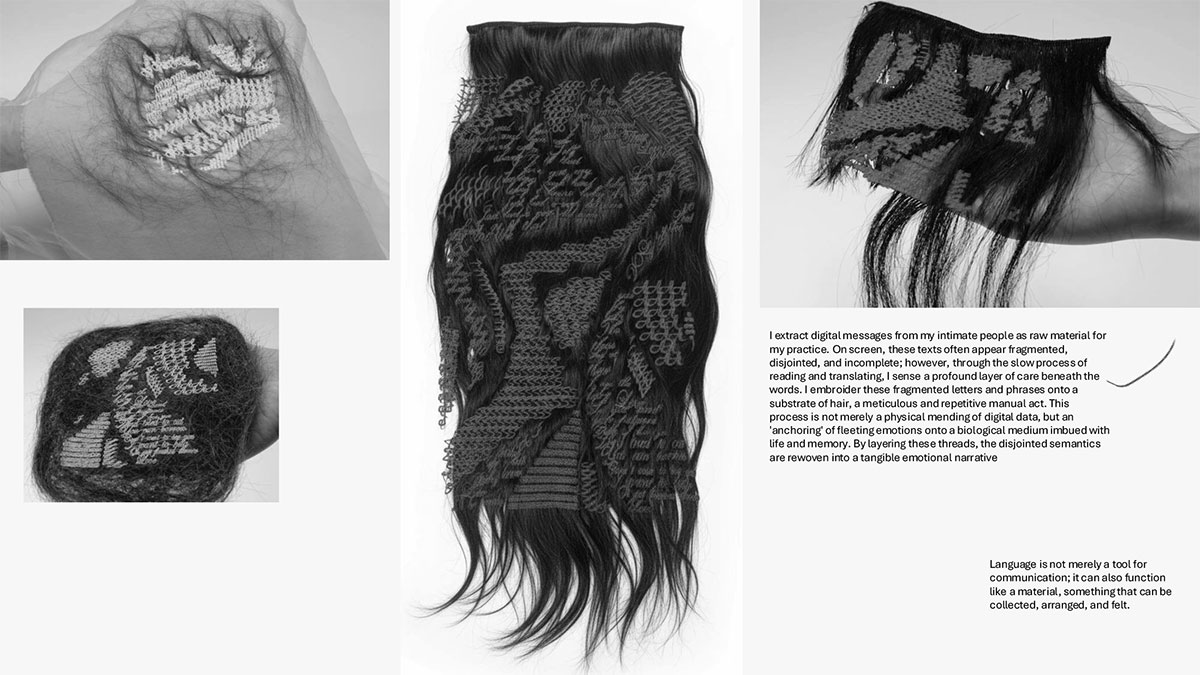
Hair as Archive: Translating Intimacy through Textile and Image
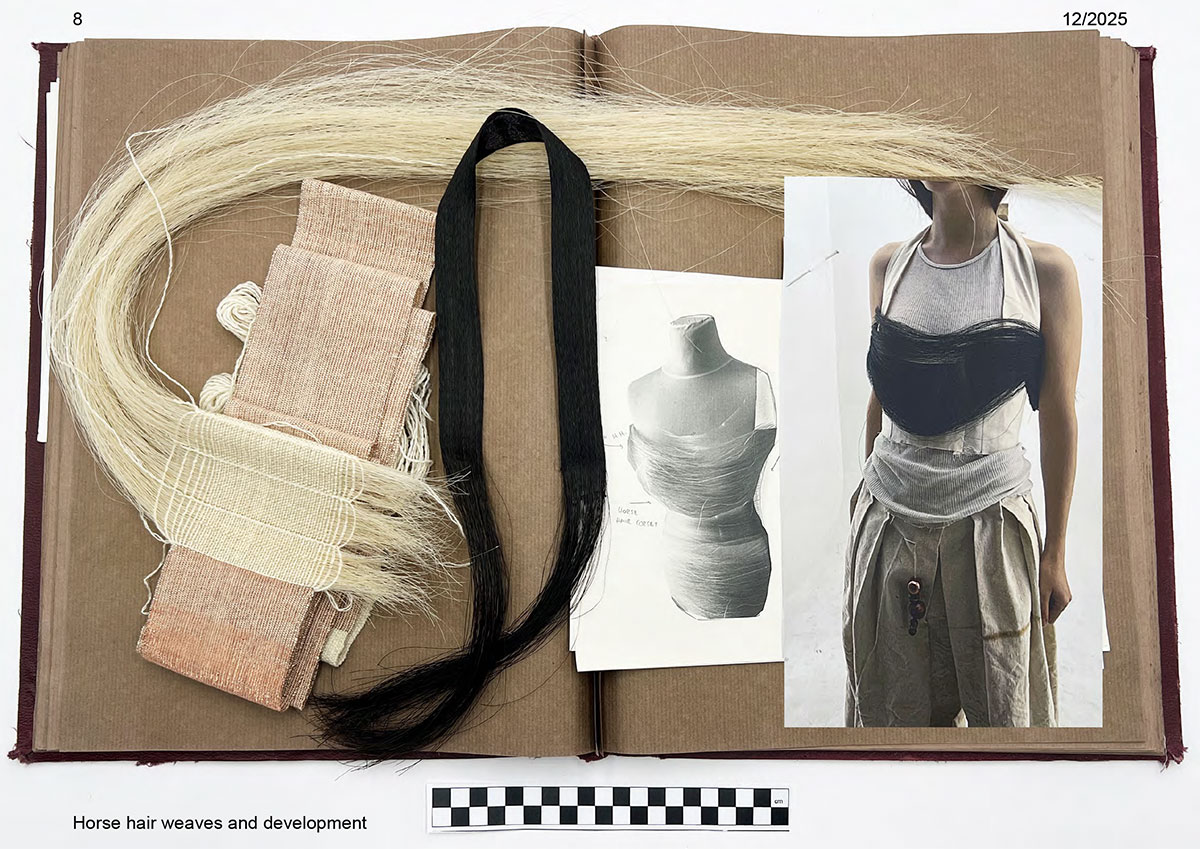
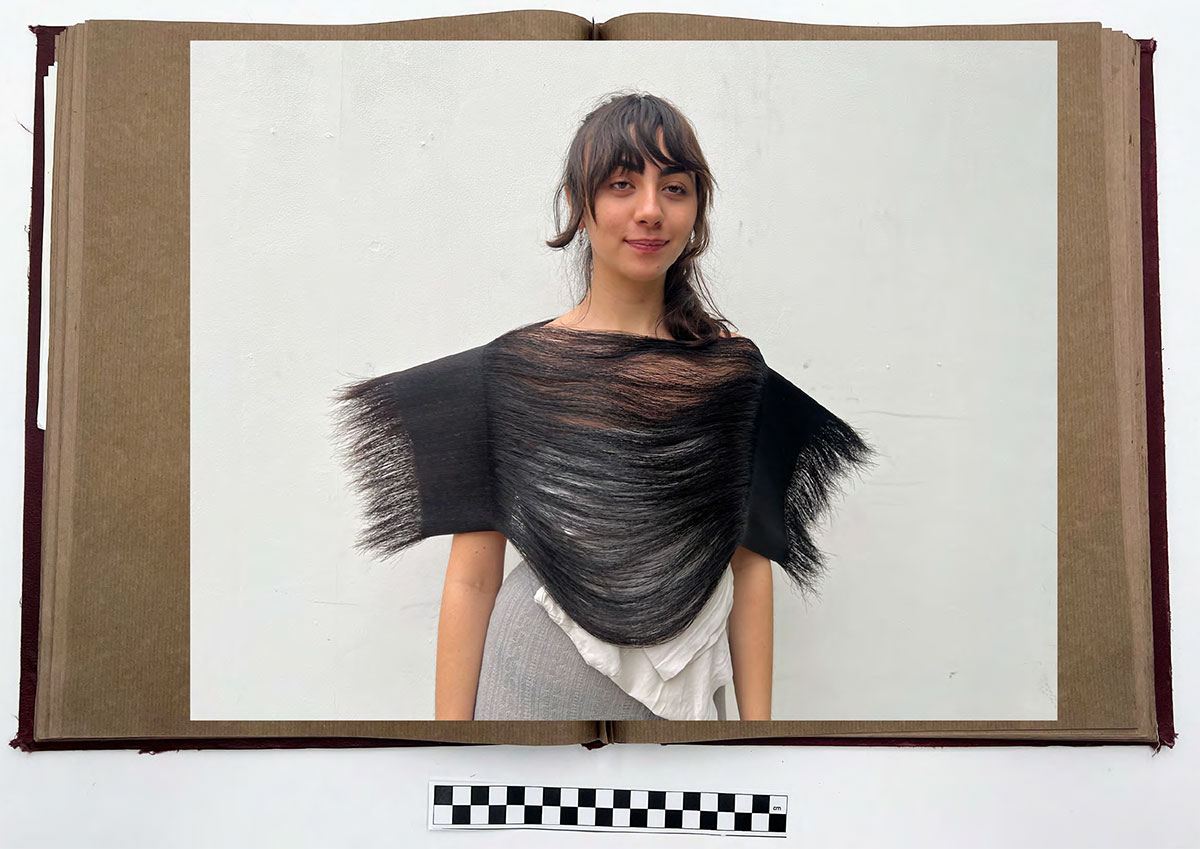
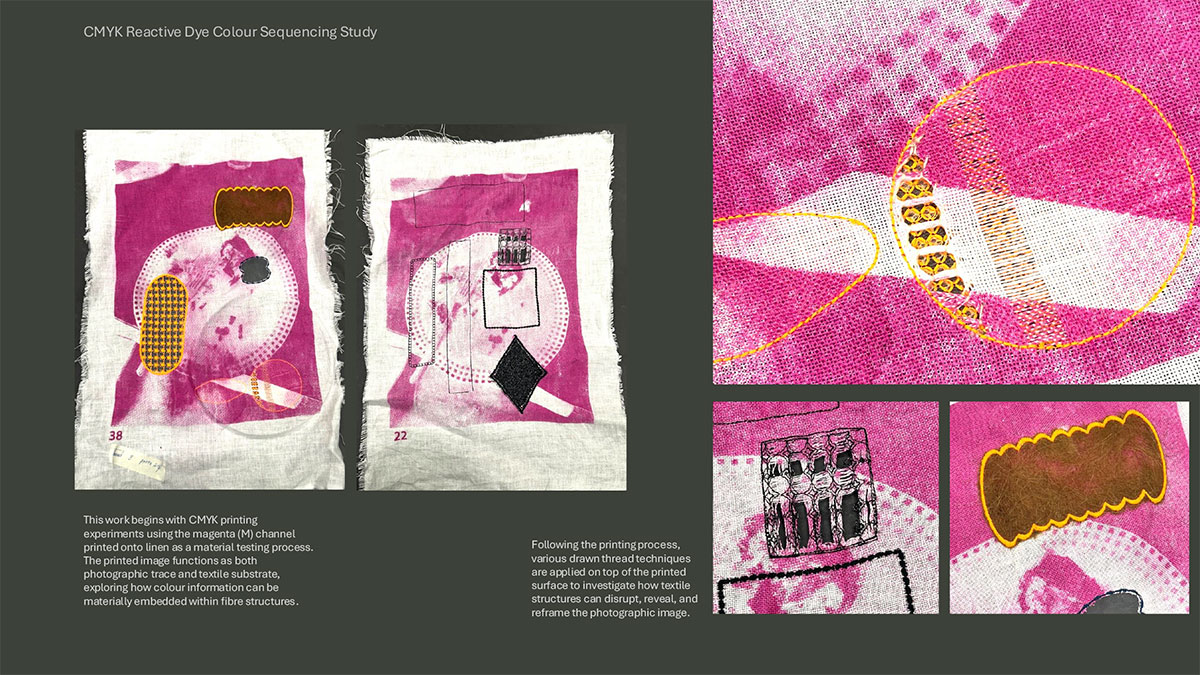
Shih Ting’s project was fascinating as it investigated human and animal hair as a textile material, and in the context of hair objects and textiles having an incredible place in material culture and textile history. Using bodily remnants—often perceived as waste—Shih Ting’s aim was to create tactile, layered textile surfaces that function as intimate material archives. Her research involved the systematic collection and classification of multi-source hair fibres, including personal hair, hair from intimate relationships and anonymously gathered salon waste. These materials are cleaned, documented and analysed to establish a body archive that recorded variations in texture, colour, tensile strength and behaviour under heat and moisture. Through wet felting, heat pressing, hand embroidery and weaving, the hair fibres were transformed into nonwoven and hybrid textile surfaces.
Alongside fibre construction, the project innovatively integrated photographic processes through CMYK screen printing with reactive dyes on linen and hair fibres. These were variously layered, stitched and embedded across and between image planes, producing varying densities and degrees of opacity.
Highly experimental, the judging panel applauded Shih Ting’s ambition to resolve, not only sampling, but create an artist’s book and installation to connect audiences with her work, supported by a suitable and achievable budget plan.
Gia Jenkins
£400
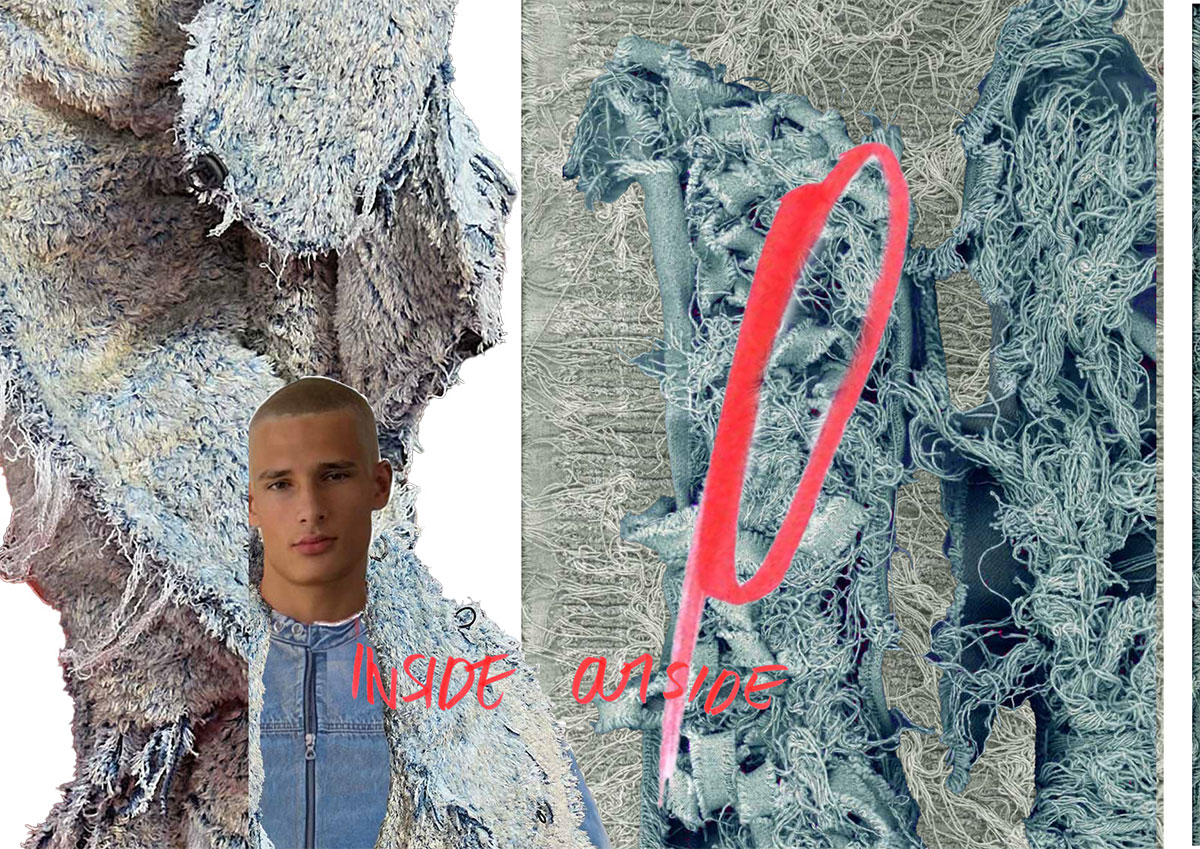
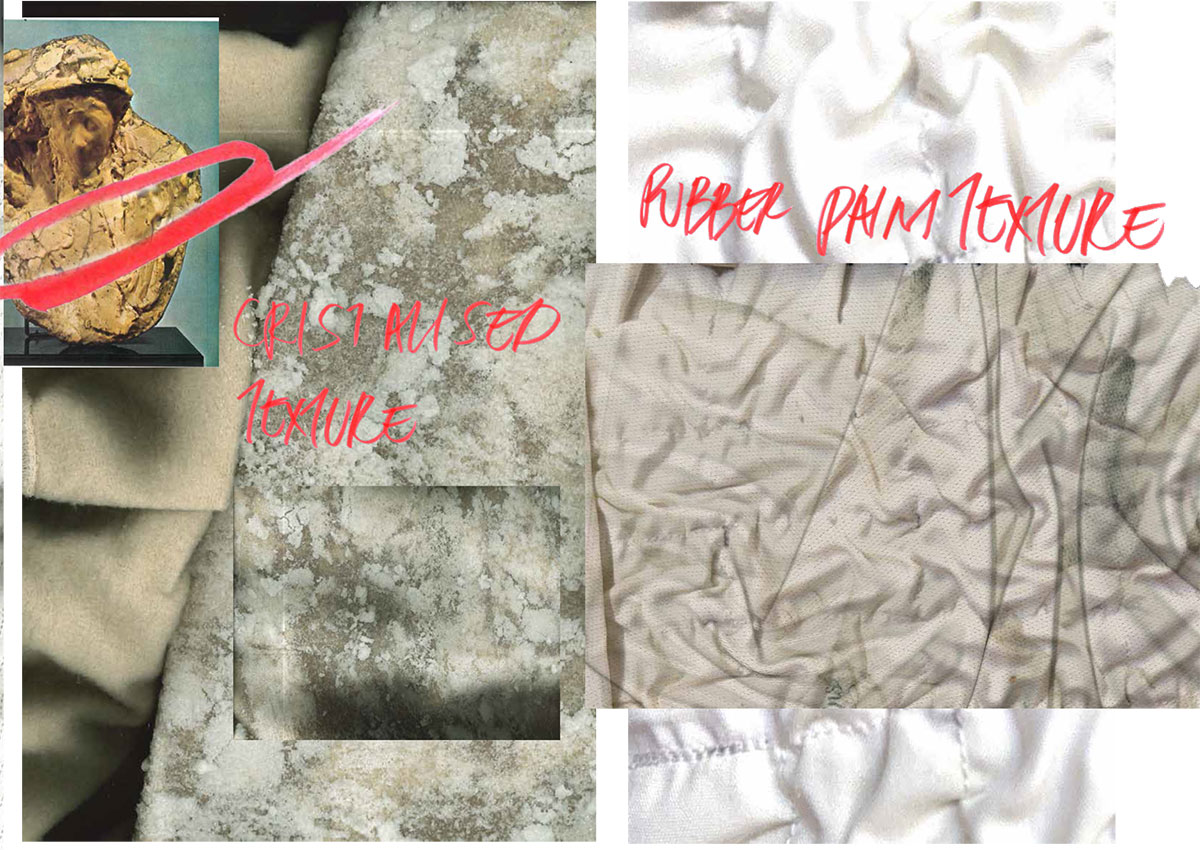
Textile as Structure: Constructing the Body Through Tension and Internal Architecture
Studying Menswear Gia’s proposal offered insight, creativity and experimental processing in this exciting field of Fashion Design, offering a fresh investigation into how internal garment structures can generate surface textile form through tension, reinforcement and controlled constraint.
Rather than treating textile as decoration, Gia’s approach was to use textiles as internal architecture producing external texture, relief and structural surface change in the form of raised and recessed areas. Her sampling explored constraint, padding and compression from within, testing how different fabric, including denim, reacts by folding, stretching, buckling and gathering. She has created an exciting collection of samples and prototypes that include treatment with rubberised coatings, quilting, tufting, layering, stuffing and reinforcement.
The judging panel found Gia’s work distinct and exciting, supported by an eloquent and detailed written proposal and relevant strategic budget plan.